Tuesday, March 20, 2012

THE PERSIAN NEW YEAR: AN EXCERPT FROM 'SHADOW OF THE LION'

This is a chapter segment from "Shadow of the Lion" in which the Persians are celebrating their New Year (Nowruz).  I did a lot of research for this chapter, however it is one that is cut from the final draft. In this scene, the royal entourage is at Troy awaiting the ships that will carry them to Thrace, on their way to Macedon.  They have been informed that once they leave Troy they will not be allowed to worship their god as is their custom so this is their last Nowruz.


            The ceremony began at sundown. A rams horn sounded the summons for the
Persians to gather in the courtyard. Everyone came dressed in their finery for the occasion
and took their places in order of rank. Roxana and her ladies, including Leila, who were all
from noble families, sat on carpets on one side. Nabarzanes, the stewards, the Warder,
and visiting envoys stood in a circle around the stack of juniper logs for the New Years
pyre. The eunuchs, servants and slaves stayed behind them.

          The chanting started with a single voice but soon others joined in. As if in answer
came the soft beat of a tabor and the thin wail of a reed flute. The Magus entered the
courtyard, accompanied by the child and two acolytes who bore the sacred fire altar. As
the people shouted loud hosannas and spread palm branches in their path, the Magus raised
his want to bless them. Everyone laid on the ground and pressed their foreheads ot the
stones in obesience.

          The child shone like a jewel beside the dignified snowy-bearded priest who was
garbed in ceremonial garments of pure white. The Magus moved toward the altar and
washed his hands three times in the basin of clean spring water held by an acolyte. On the
altar was a small bowl containing grain roasted with salt, and seeds. Beside it were placed
baskets of figs, dates and dried herbs. Another dish held honey and another contained milk. He offered the grain and seeds at the altar and burned them for the God. Then he poured the honey and milk into a bronze offering dish ad set it on the ground in front of the altar, placing the baskets of fruit and herbs on the ground beside it.

          In a clear, pious voice, the Magus sand the anthem. There was an absolute silence as he sang the sacred words.
            “He is the God of all things
  The Fire of heaven and earth, sky and wind.
             He is the power of life and the power of death.
            All things that grow and fill the universe are His.

            The old priests hands shook as he lifted the flask of purified water and drank from
it. As he blessed the oil and poured some for the God, a sudden sound from beyond the stone walls stopped his voice. There was a long, murmuring hush, then a sigh of relief as the marching footsteps of guards calling out their rounds for the night watch retreated. The Magus stood in an attitude of prayer, his hands on his forehead.
      “We must pray for peace between all nations, food for the hungry, and steadfastness in the face of many hardships, he said. He bowed to the child, hand toforehead, and spoke the words of worship and adoration.
            “Lord, O light of all mankind, O Lord who sees all things,
            Upon the Shah who stands in awe of Thee
            Confer thy bounteous blessings...”
           Then he broke pieces of sandalwood and placed them in the fire holder, drank again from the consecrated water, and emptied the flask to east and west, sprkling some on the door lintels.
           “Rejoice with the fruits of the earth,” he cried.
          
             As the sacred offering burned, the thrum of a harp shimmered around the courtyard.


                  An acolyte threw a torch into the pile of logs. Jubilant cheers filled the courtyard. Cymbals clanged and tabors rattled. The blazing logs drenched everything in gold. Even the walls and pillars seemed to be burning. The Magus raised his wand and the people lifted their hands to sing the anthem of praise to the sky, sun and stars.

                 It was a glorious night. The air was blue with smoke and fragrant with the resin-scent of burning juniper. Above, in the clear- star-filled sky, the new moon hung like the curved blade of a shimshir. Just next to it, Venus shone brightly as a beacon.
                    The child drank in everything; the bright flames, the dazzle of light reflecting off  gold and jewelry. His rears rang from the din of the music. He looked around and saw his mother standing motionless, sparkling in the firelight. A strange power seemed to  radiate from her that made a tingling sensation prickle down his spine. He felt like crying, but did not know why. He looked over at Leila and gave her a hesitant smile. If he could have, he would run to her for reassurance, but it would not be seemly to behave like a baby.

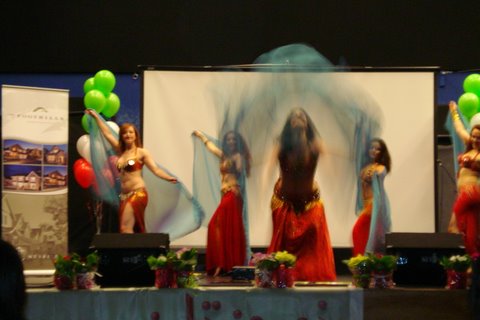
                 The music of flutes and strings began. Hands clapped, drums and cymbals beat. Dancers began to twirl to the skirling of reed pipes and the rich lilting tune of the ivory flute. In the midst, with skirts and jewels swinging, arms entwined, the women wove and  twisted, swaying to the beat. He saw his mother, laughing as if she had no dread, no cares in the world, as she lead the dance.
                 Suddenly he was nudged forward, caught in her beckoning hands. She whirled him round and round, his feet flying over the stones as he laughed with delight, caught in the rhythm of the joyful dance.

                 Some of the men began to leap over the flames, calling on Atar the Fire, to bring them good fortune. Mesmerized by the hypnotic cadence of the music, the child held his breath as they jumped and twirled, daring the flames to scorch them. Their ululating grew louder and the dance became more frenzied, until finally the flames burned down to embers and the drum-beats slowed to a faint thudding. The fire dancers sank to the ground in a trance, beads of sweat streaming down their faces, their eyes glazed with rapture.

                Then the kitchen slaves announced that the feast was ready. The child took his
place beside the Magus seated on a dais raised above the heaps of pillows where the guests reclined. The entire floor was covered with dining cloths except for narrow spaces where the servants moved about carrying trays heaped with food.
                 There was pheasant cooked in pomegranate juice; whole roasted lambs; piglets stuffed with apples and pistachios; marrows and melons and fruits of every variety;pastries drenched in honey and little cakes made with almonds, dates and cloves. Before the feasting began the Magus blessed the special Nauruz foods: the sprouted grains; the purple hyacinth petals; the sweet puddings; the ripe black olives their brine of vinegar and herbs; the russet apples saved from the autumn harvest.
            “This is the time of thanksgiving and bestowing gifts,” he announced in his high,
ancient voice. It is the way we have celebrated the New Year since the old days when Shah Kyros proclaimed it to be a festival of friendship. He laid his hand on the childs head. The Shah, our Honored One, is always the first to be served.
            Nabarzanes tucked an embroidered napkin over the front of Iskanders coat.
        Iskander-shah, I wont even scold you today if you spill anything or talk with your
mouth full, he whispered good-humouredly. This napkin has been used by all the Persian
Shahs since the time of the Great Kyros, Father of Persia. He stood, and addressed the
banquet guests. Voices grew silent as he began his speech.
            “Our Shahs, the First Darius and Xerxes the Destroyer, were hated by the Greeks.
The Greeks say we Persians stole sacred treasures from the High Place in Athens and
drove their priests out of the temples. Because of this, Persians are not tolerated in
Greece, so when we go to Macedon, we will be prohibited from practicing our customs.
            He spoke in the high-bred Elamite tongue of the Persian royalty, in a voice deep-toned as
a nefer. His brows were drawn over his nose in a stern expression. Shah Kyros, the lords Annointed, ruled over many nations. Even though they did not speak the same language or worship the same God as Persia he believed that all men are Gods children, so he made those whom he conquered -- Medes, Assyrians, Babylonians, Soghdians, Bactrians -- one kingdom. We must try to live in peace and accord with the Macedonians. He looked down upon the child with a compassionate smile. Iskander-
shah, your father the Invincible Alexander, also believed in the union of all nations. He honored our God and paid tribute to the Great Kyros. You are a fortunate child, for you have been born into the best of two worlds. May you always be proud of who you are, and rule as wisely as your father and the Great Shah Kyros. He bowed low before the child in a gesture of respect. In his eyes were both pride and grief. The people of Persia look to you as their Shah now. You must live well and endure, for the sake of us all.

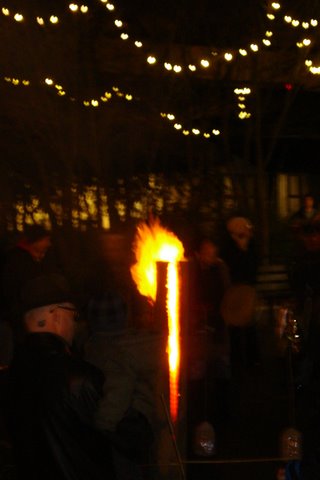
 The photos are from the Persian New Year (No-rooz) that I attended on the weekend to celebrate the Spring Equinox.

Saturday, February 25, 2012

ART GALLERY EXHIBITS PROVOKE NOSTALGIA AND CULTURAL AWARENESS

The Vancouver Art Gallery
My friend invited me to an opening night exhibit at the Vancouver Art Gallery.  The first exhibit we visited was LIGHTS OUT! Canadian Painting from the 1960’s.  This was mainly modernist paintings reflecting the political and cultural tumult of the times. Canadian painting during the sixties ranged from colourfield works and bold optical images to haunting figurative works.  Artists like Harold Town, Michael Snow, and Michael Morris to name a few are on display. 
But what really captured my attention in that exhibit was an introduction by the curator mentioning some of the artists at the Vancouver Art School in the 1960.  Among the names was Reg Holmes, who was my art teacher back then when I was young (in my early 20’s) with a small son (Stevie) and struggling to adapt to a conventional life when I really wanted to be out in the world exploring, writing and experiencing all the exciting things that were going on.  I was still working occasionally for the Vancouver Sun and Province news libraries, at the end of the ‘50’s and in the early ‘60’s decided to pursue art as well as my writing.  Those days that I attended night classes at the Vancouver Art School were exciting and memorable.  Funny, but lately I’ve been thinking about if I should make time to pursue some painting again (I used to paint in oils and watercolours but haven’t for quite some time.) And the Reg Holme’s name popped up and I’ve been overwhelmed by nostalgic memories ever since.

(this exhibit runs to April 29, 1012)

The main exhibit was the BEAT NATION: Art, Hip Hop and Aboriginal Culture.  Young aboriginal artists from across Canada have contributed to this show.  Some of it has been influenced by the hip hop culture and music which has transformed the art forms for these talented artists. The exhibit reflects the pop culture, graffiti with Haida figures, carved skateboards that look like intricate basket weaving and include the works of Sonny Assu, Jordan Bennett, Skeena Reece and Nicholas Galanin among others.
I was particularly intrigued by the film presentations that left my friend and I with a deep impression of the Aboriginal people in Canada, their rich culture and the years of struggle they have faced.  “Oh Canada, Our Home ON Native Land” was a thought we carried with us after we left the gallery.

(This exhibit runs to June 3, 2012)

Friday, February 24, 2012

HERE'S WHAT I'M WORKING ON NOW: A CELTIC TALE

Caer Gwyn

DRAGONS IN THE SKY
By
Wynn Bexton

(W. Ruth Kozak)

Was it the sound of the wind or the bird song

from the meadow that brought Olwen’s voice

to me that day, as I sat on the edge of

the earth mound at Old Sarum

on the Salisbury Plain, in England? I looked through

her eyes, and saw life as it was then.

She spoke through me, telling her story.

                                            Wynn Bexton

 PART ONE

“CHILD OF THE RAVEN”

The Druids believed that when we die

Our souls return again, in another form...


Stanza One: 

The Song Of Olwen

I am the Druid.

The Druids teach of the stars, the world

and the nature of the gods.

The Druids are the Spokesmen of the gods.

The Goddess speaks and says:

Olwen is the fairest among flowers,

daughter of the hawthorn,

Child of the Raven,

The Druid’s child.


            Listen to my song: I am an honoured child.

            I am Olwen, daughter of the Earth Mother,

            Child of the Raven

            My voice is the bird’s song: my music is the wind’s harp.

            I will be the pine cone

            clinging to the branch.

            The wind will not dislodge me.


            I will be the coral

            on the sea reef

            The waves will not displace me.

            I will be the stone dolman

            of the Sacred Henge.

            Neither time nor elements will disturb me.

            I will be the willow

            bending in the wind.

            I will be the wave

            uncurling on the sea.

            I will be the mountain

            My pinnacle crowned with sun.

            Steadfast I will stand.


 *    *    *


An Iron Age settlement like the one Olwen lived in 
(this is at St. Fagan's Heritage Park, Cardiff, Wales)


Stanza Two: Song for Caer Gwyn

On the southern plain of Albion, where the borders of our tribe enclose the Great Stone Circle, the hill fort of Caer Gwyn guards the passages of the Chalk Trail. In this day only a mound of earth rises out of the grassy fields like an inverted bowl, but when I was a child there were greenwoods and beech groves where I collected roots and herbs, and an oak grove where the Druids worshipped at a secret shrine. The Druids are the Oak Seers and they know all the Mysteries.

            Our village was enclosed within a circular palisade of staves.  It was a small village with wattled huts, like rounded straw stacks with low roof thatches.  Inside the stockade an outer circle of stables and cattle sheds ringed the craftsmen’s huts; then the houses of the freemen, and in the centre of the whorl, like the hub of a wheel, stood the timbered lodge of my grandfather, the elder priest.

            Outside the palisade, the fields were bright with wild flowers and our cattle grazed in the lush green pastures along the muddy river bank.  Our yeomen herded cattle and raised small crops of barley and wheat, protected by the warriors of the King’s Royal War Band who kept our borders safe from the raiders of rival tribes.

            Those days Caer Gwyn’s timbered Hall rang with the bard’s songs and in the hidden grove the Oak Seers prophesied Fortune, War and Death.  Now the Council Hall and the King’s lodges have decayed into earth.  The mound is bare except for small shrubs and wild grasses.  The oak grove that once held the mysteries of the gods has been burned and ploughed into the soil.

            Here, in the stillness of the summer afternoon, with the sun dappling the countryside a green-gold, and the air redolent with the scent of fallow earth and meadow grass, listen to the gods speak.

The God Speaks and says:

Who knows the secrets of the Oak grove?  The spirits of priests and kings are here.

I started this novel back in the early 80's and worked on it much of the time I was living in Greece. I set it aside later when I decided to write "Shadow of the Lion".  I was discouraged because my writing instructor told me I should write it in third person p.o.v. and it got all mixed up.  I've recently taken the old manuscript out of the box and I'm retyping it into the computer.  It definitely is a first person narrative, because the voice of Olwen came to me and I channeled her to tell her story. Some of the chapters (or 'stanzas') are told in Bardic verse instead of prose. 

Monday, February 20, 2012

SAYING FAREWELL AT THE END OF A LONG JOURNEY


It's a very odd feeling when you come to the end and ship off your novel to an editor.  Kind of like giving birth.  And now what?  I felt pretty burned out after all that work I'd done myself and knew it was time to let another pair of eyes look at it.  Of course there'll be a bit more work involved once she's done with it, but it is mostly off my hands now.  Then I must face the reality of the publishing world and hope for the best.

What will I do meantime?  I have been feeling a great need for some down time lately, between the work I did on Shadow of the Lion, and my classes which are on-going for another few weeks.  Since I send off the manuscript last week, I didn't feel much like writing.  My brain was pretty fried.
I did manage to write one travel article and have others to work on but really, I needed a rest.

While I wait to see what happens with Shadow, I will continue retyping my Celtic novel, "Dragons in the Sky".  I haven't thought of doing any editing and rewrites for it as yet.  I need to clear the decks completely and won't do that until I am in the process of marketing Shadow. 

Lately I've gone to a couple of poetry readings and have some ideas for some new poems for my "Songs for Erato" (Greek poems) collection.  But the Muse hasn't been very evident as yet so I'll give her a rest for awhile.  I need to regroup and revitalize myself.  Can hardly wait for Spring weather to get here so I can go on some nice long refreshing walks!

Saturday, January 28, 2012

PUTTING THE FINAL TOUCHES ON "SHADOW OF THE LION"

Bust of young Alexander, Pella


I'm starting my final round of edits and cutting of my novel "Shadow of the Lion" before handing it over to the professional editor.  It's been a long, difficult job going through it starting with all the workshopping and rewrites I did while writing it, followed by the first reader's critique.  Then, when I'd gone through editing her suggestions, another reader's critique with more detailed corrections.  That editing was strictly focusing on more cuts, spell checks and line edits.  Now I'm going through it again to see what more I can cut, as somehow in spite of dropping whole chapters the word count doesn't seem to shrink as much as I thought it would!


This is Where the Story Begins:  Babylon

And the Death of Alexander, June 323 BC:  Alexander's funeral carriage

Until you get yourself totally absorbed in the editing as I've been, you don't realize what a painstaking job it can be!  The writer is finished her work now and this last round of editing was much easier because of it.  I am able to detach myself and be more critical, spotting repetitious phrases, unnecessary information etc.  One of the problems with historical fiction is that the writer often puts too much of their research into the story when it isn't really necessary.

Because I workshopped it at my Scribbler's critique group all the way through, and worked in 'blocks', by the time it was completed in December 2010, I didn't need to do much rewriting.  It has been mainly the cutting and tightening up, disposing of passages that were not really needed  -- sort of 'overloads' of information.  Although most of those chapters that I dropped were really interesting and I enjoyed writing them, it was a matter of necessity to let them go.

So now I'm almost finished with it other than what the professional editor will have to suggest before I start pitching it out into the big wide world of publishers.  The only things I have left to write, are the acknowledgements, afterword and compiling my glossary and cast list (which are mostly done).  And then I'll brush up my synopsis at bit more.  Then it's done!   And I have to say I will be very relieved and happy to have it off my hands so I can focus on my other work-in-progress "Dragons in the Sky" which you'll be hearing more about in my blog soon.


This is Where the Story Ends:  The fortress of Amphipolis, Macedonia

The River Strymon, Amphipolis

Sunday, January 01, 2012

A WRITER'S RESOLUTIONS FOR 2012

Where I work

It isn't really a 'resolution' but it's a number one must on my list of things to do for this new year.  That is: to finished the editing on Shadow of the Lion, get it reviewed by a pro. editor, and then start marketing it in earnest.  My plan is to try traditional publishers first, and if that fails, I'll consider self-publishing later.  So starting today, January 2, 2012, I'll resume editing in order to hand over the manuscript by the end of the month. 

I did get some of my writing published in book form this year:  "Sudden Thunder", a poetry anthology has 3 of my poems. 

 And "Foreign Flavours" published by Writers Abroad has a story by me about my favorite Greek dish and its origins. ("Arni Kelftiko" Bandit's Lamb)


My 'resolutions' do include writing projects as I have several travel articles to catch up with and deadlines approaching.  But another important thing, (and this is a resolution), to read through the stack of to-be-read books I've accumulated over the past years.  (I got two new books for Christmas to add to the lot).  I already got a start on this over Christmas but resolve to make it a daily routine now to read a bit since I am not devoured by research and history texts at the moment.

Me, in front of Virginia Woolf's (and once George Bernard Shaw's) house in London

Another 'resolution' is to see more movies. (I've missed so many good ones as I hesitate to go on my own).  After watching "My Week with Marilyn" recently I realize how much I do love good movies and really must make an effort to get to more. (I don't watch a lot of TV but as I'm going to get a new DVD player, I can also catch up on some of the movies I have hoarded at home.)

I ended 2010 by finishing Shadow of the Lion . I ended 2011 by working on the final edits.  I hope to end 2012 with a publishing contract.  And by the end of 2012 I hope to have finished writing and editing Dragons in the Sky: A Celtic Tale

Of course, I love to plan travels too but this year the promotion of the novel is #1 on my list of  'to-do's' so it will depend on what expenditures this entails as to whether I can make any long trips (i.e. to my beloved Greece with a stop at Amsterdam).  If not, I'll be satisfied with some shorter, more affordable  journeys.

I'm looking forward to this new year.  Most of all, to the publication of my book!


Friday, December 30, 2011

READING ABOUT JACK KEROUAC AND REMINISCING

"The only people for me are the mad ones, the ones who are mad to live, mad to talk, mad to be saved, desirous of everything at the same time, the ones who never yawn or say a commonplace thing, but burn, burn, burn, like fabulous yellow Roman candles exploding like spiders across the stars, and in the middle, you see the blue center-light pop, and everybody goes ahh..." Jack Kerouac "On the Road"


Over the Christmas holidays I have been catching up on some reading out of the pile of to-be-read books.  My first choice was a book by the former wife of my favorite writer of the '50's,  Jack Kerouac.  "You'll be OK" was about their short, bitter-sweet marriage, and it gave me a lot of insights in this writer I have for so long admired.  Today I began another book about Kerouac  "Conversations With Jack Kerouac".  It has revived in me an interest to go back and read a couple of his famous books that had a huge impact on me as a budding writer and a young woman trying to 'find herself' back in the end of the '50's and during the '60's. 
Jack Kerouac  Mar 12,1922- Oct 21, 1969
This was my pin-up boy picture in the late '50's and 60's. ( I think I've still got it among my papers and clippings about Kerouac)

I remember my first visit to New York City and what a thrill it was to me, and how it literally changed my life and way of thinking.  I was fascinated to be in the city where Kerouac had spent so much time and especially to be staying in the Village.  On a second trip to NYC in the mid '70's I stayed in the Bronx, but near a place where he had lived for a time. In future travels I'd spend more time in San Francisco, another of his haunts.  And the two books I just read I had purchased at the City Lights Bookstore a couple of years ago on a visit there.  I remember being so excited to find a little street named "Jack Kerouac Street" and to be in that book store where all the Beat poets had hung out.
I have always admired Kerouac's free style of writing, the spontaneous writing that enjoy.  In my younger days I always wanted to write like him.  But writing historical fiction is a different genre and style.  Now I'd like to re-read some of his books and study his writing further.  Perhaps when I start writing my memoirs "Life Below the Acropolis" I could incorporate some of his style.

Kerouac's typewriter

Here is a memoir I wrote some time ago about that first visit to New York.  It's a time that I will never forget because it truly changed my life.

FINDING MYSELF IN NEW YORK CITY

In the ‘60’s I was living in a new suburb of Edmonton in northern Alberta, a young stay-at-home Mom with a toddler daughter and a six year old son in grade one and a husband who was quickly descending into the bottom of a vodka bottle. Up until the time we’d moved there, when my husband was transferred as plant manager for a big new retread plant, I’d worked in a newspaper editorial department on the Coast, with dreams of being a writer, and an interesting group of friends including some I’d met at art school.
Life in that northern city sapped the creativity out of me. I was so absorbed in trying to figure out what to do about my home-situation at a time when there were no counselors available and no family to call on for help, that soon I lost ‘myself’. I stopped writing and eventually stopped painting too. To keep busy and creative, I started up my own nursery school, mainly for neighborhood kids. And in time I saved up enough money so that I could take myself on a vacation -- the first vacation I’d had in years on my own.  Two of my best friends had moved East, one to New York, the other to Washington D.C. I was going to visit them. In Vancouver, we’d been the “Three Musketeers” and it had been several years since I’d seen them. 

It had been a dream of mine since I was a teenager to go to New York. When I got there, I thought I’d died and gone to Beatnik heaven!  There I was smack in the middle of Greenwich Village, home of my hero Jack Kerouac.  I strode the streets of New York fearlessly, in awe of everything I saw. 
My friend Bobby, on the other hand, had been living there for some time and had become totally paranoid. I couldn’t get over all the bolts and locks and chains on the door to her apartment. She scolded me for speaking to people on the street, or for sitting on the stoop in the evening chatting to passers-by.

“You can’t do that!” she said. “This is New York.”

“But I’m doing it,” I retorted. “I like it here.”  I did. I loved New York. I felt it right into my soul. I was like Alice in Wonderland. What a thrill to sit at a sidewalk cafe overhearing a conversation at another table between a man and woman who, I realized, were discussing their friend “Janice” (Joplin, that is). And another time, sitting in a small bar beside some handsome young men who were relating the funny story of appearing on Ed Sullivan (the Everly Brothers).

It was August 1969. Everyone at the time was discussing “Woodstock”.  Was I going to Woodstock? I had no idea what they were talking about.  Sometime during my visit I was introduced to marijuana and hashish. At first I was afraid, because ten years before I’d seen my boyfriend destroyed by heroin. Drugs were a bad business to get mixed up in. But they educated me. MJ was a medicinal herb, and hashish it’s derivative. I tried it. Nothing terrible happened to me except a warm and fuzzy feeling.

I spent a few weeks in New York, walking around freely, gawking at the sights, going up into the Empire State Building (then the tallest building in the world as it has become, once again) Wow! What a thrill. Walking up the spiral staircase inside the Statue of Liberty. Breathtaking! Riding the buses and subway, walking in Central Park. Every breath I took, every step along those busy, exciting streets, I got closer to finding ‘myself’. Alberta and my problems were far, far away.

My other friend, Joan, was living in Washington DC. She was the “private secretary” of a wealthy Black lawyer. I hopped a train and went down to visit her, again, stepping into another Wonderland.
Joan’s “boss” had put her up in an elegant Colonial apartment filled with antique furniture.
She was socializing with the White House crowd and rubbing shoulders with the rich and famous. As I was her out-of-town guest I had to pass the ‘inspection’, and was later invited to join her and a group of her boss’s friends at a swanky exclusive private club for professional persons of colour. She and I were the only two women in the group and the only white people in the place. Quite an experience and one that I have never forgotten, all because of a very nice African American television journalist who befriended me.

After drinks at the club, he invited me to come with him to “a very special bar” where he said there was an incredible pianist/singer entertaining.  It happened to be shortly after the Washington Race Riots, and he wanted to talk to me about it, fill me in on the situation first-hand and from an African American person’s point-of-view.

 I didn’t know the name of this bar until I found a remastered CD of this singer’s music, recorded about the time I’d been there, and released the following year, projecting her into the limelight.  The bar was known as The Bohemian Caverns. The singer, he told me, was so talented that she should be Nationally known. Her name was Roberta Flack.  It was a small, dark piano bar. She played the piano and sang and she was truly magnificent.  This was when I first heard her sing “The First Time Ever I Saw Your Face” and I’ve never forgotten it. I’ll never forget how, at the break, I was in the washroom and she was there too and we talked. It was a great thrill. I knew I was meeting a ‘star’, although her first album was not released until the following year.  Now, as I sit and listen to her remastered CD, singing those same songs she sang that night I first heard her, I remember that night, and I remember how that visit to New York changed my life forever.

I returned to New York several days later. When I arrived at Bobby’s apartment, she was not at home. Fortunately I had the keys to get in. Shortly after I arrived, someone came to the door to call for her. It was a young man named Nickie. He was surprised to find me there and concerned about Bobby’s whereabouts. It seemed he had been with her a day or two before and they had gone to visit a friend of his. Apparently when they were at this friend’s apartment, there was a huge drug raid, because the ‘friend’ it seemed was a big dealer of LSD. Bobby was found to be carrying a bag of marijuana and had been arrested. It turned out she was carrying her marijuana in her purse because she had been afraid I would ‘smoke’ some of it. Consequently, because of her paranoia, she was incarcerated in the immigration detention centre. Seems she had been living and working illegally in New York.

 I hung around New York with Nickie after that and we visited Bobby in the big red-brick prison, took her bags of cookies and other treats. She was going to be deported. I was going to fly back to Alberta. But I didn’t want to go.

Nickie was probably one of the most interesting people I’ve ever met. He showed me a different way of thinking and living. And by the time I boarded that plane to fly home I was a changed person. I had found myself. And from then on, my life would never be the same.
 

New York skyline, Sept 2006
Me, posing with a wax figure of Morgan Freeman. NYC 2006


Thursday, December 22, 2011

CELEBRATING WINTER SOLSTICE

Solstice Fire

There were Solstice celebrations in various parts of town last night. I went over to my old school at the Britannia Community Centre where they were holding ceremonies with drums, singing and a solstice fire.  The highlight of the evening would be a walk around the candle-lit labyrinth.

Solstice celebrations are old Celtic traditions and strangely, as I was riding the bus over to the Centre, suddenly my protagonist Olwen, from my work-in-progress "Dragons in the Sky" began to speak to me.  It's been many years since I channeled Olwen's spirit.  I had set aside her story back in '89 when I wanted to work on the novel about Alexander the Great's little known son.  I had thought at the time that, as I was writing it as a juvenile historical, it would only take me a  year or so, then I'd get back to "Dragons" and finish it.  Besides, I was discouraged with the Celtic novel, having been lead astray by suggestions from a writing instructor and less than enthusiastic critiques.  Well...to make a long saga short...once I decided to write "Shadow" in multiple point of view, it became very complicated and took my much, much longer than ever anticipated.  I finally finished it last December and I'm currently working on the cuts and line edits to get it in perfect shape for publishing.


Candles for Solstice

      In the meantime, i have been retyping the old manuscript of "Dragons" and workshopping it at my critique group. They love it. Especially the Bardic verse that part of it is written in.  But I had decided not to start doing any real edits on it until I am finished with "Shadow" and that won't be until the end of January.  So other than the retyping, I've not given the story or the characters too much thought.
I've certainly not heard any of them 'speak' to me.  That is, until last night.

A Solstice log blazes in the Circle of drummers and chanters.

     "Dragons in the Sky" is very much a first-person narrative, told in the voice of Olwen, a young acolyte of the Raven clan, destined to leave for the Holy Isle where she will become a full-fledged Druid priestess.  I had no idea I was going to write this story, when it began back in around 1978.  One day a voice spoke to me, a young girl, she said her name was Olwen and she wanted to tell me her story.  So I began to channel her spirit and write down what she said.  As the story progressed, some of it written in bardic verse, I was more and more amazed.  At first, I didn't know where exactly this all took place until one of my early visits to England when I was advised by an elderly psychic to visit Stonehenge and to see what spirits spoke to me in the inner circle. (That was when you could still go inside the circle).  Later, while waiting for the bus at Salisbury I had noticed a sign about an Iron Age hill fort just outside of town. As I had time to kill, I decided to walk there.  And as I approached Old Sarum I knew instinctively that this was where Olwen's story took place. 


I made a couple of other visits there later and each time more of her story unfolded.  This past summer I went again, just to research and refresh my memory before I start reworking the novel.  But until now, I have not heard Olwen's voice.  How strange and appropriate it was that she spoke to me when I was on my way to the Solstice rites.


The candle-lit Labyrinth

I walked the candle-lit labyrinth and meditated, wondering where this new year will lead me.  I know I am in touch with Olwen again and I'm glad for that.  And I am confident that "Shadow of the Lion" will find a good publishing home. 

So now, this year ends, and the New Year begins.  And the first day of wintered boded well with bright sunshine and mild weather.  Once the holiday merrymaking is over and things settle back into the new routine, I'll be returning to my work on "Dragons in the Sky" and waiting for Olwen's voice as I write down her very unique and amazing story.  (And yes, there is an Alexander connection in it too!) 


Thursday, December 08, 2011

WRITING TO MUSIC


When I'm writing or editing I like to listen to inspiring music.  If I'm working on "Shadow of the Lion" as I am just now, doing some final edits, I prefer to have classical music playing.  I find it adds a soothing background while I work. 

In the ancient days story tellers and poets always used music as part of their platform, such as the lyric poet Sappho who played a lyre to accompany her verses.  And the bards of the ancient Celts also used music to record their tribal stories. 

But I think you have to be careful what musical background you use as you write.  I could never listen to rap or current popular songs when I'm working on historical creative writing.  It's important to be able to hear the cadence of the prose as well and this would only interfere with the rhythm of the words.  When I was reworking my play "The Street" I listened to jazz, specifically the music of Chet Baker and other well known jazz musicians of the '50's.  When I was writing "Dragons in the Sky" I listened to Laurena McKennitt as her music is very Celtic.  For "Shadow of the Lion" I choose classical music, sometimes the sound-tracks from movies, to give it that "epic" feeling.

Do you listen to music when you are writing?  If so, what kind of music do you choose?