Showing posts with label history. Show all posts

Thursday, March 09, 2017

SHADOW OF THE LION: THE FIELDS OF HADES.

Add to Technorati Favorites

It's been a while since I blogged here and a lot has happened since my trip to Greece in Sept/October 2016.  The second half of SHADOW OF THE LION was published in January 2017 and is now available on Amazon.com and the Book Depository (which doesn't charge shipping!)

The second half of the novel is subtitled SHADOW OF THE LION: THE FIELDS OF HADES and it is an exciting end to the tale of the fall of Alexander the Great's dynasty with the battle lines drawn not only with the Successor who vie to take over the Empire but also the women who vie to take over the throne.  I'll post more details on this but for now, here's the book as it is. I love the cover and I know you'll love the content.


As the after-shocks of Alexander’s death bring disorder to his Empire from Macedon to Persia, a deadly power struggle is waged over who will dominate to rule.
Alexander’s Generals ‘The Successors’, contest who will emerge to rule the vast expanse of Alexander’s Empire. The ‘Royal Women’ Alexander’s mother Olympias and niece Adea-Eurydike also vie for control.
SHADOW OF THE LION: THE FIELDS OF HADES, is Book Two of an epic story of political intrigue and ruthless ambition, complete with all the ingredients of a Greek tragedy. It is also a story that happens to be true.


Friday, August 08, 2014

SHADOW OF THE LION: Blood on the Moon, Now available on Amazon.com


Here's the big news:  
SHADOW OF THE LION, Blood on the Moon is listed on Amazon. Surprised it's a hard cover. Pretty exciting though! Official release day, August 11.

http://www.amazon.com/SHADOW-OF-THE-LION-BLOOD/dp/0992715512/ref=sr_1_fkmr1_1?ie=UTF8&qid=1407528500&sr=8-1-fkmr1&keywords=Shadow+of+the+Lion+Volume+1+Blood+on+the+Moon


Tuesday, November 12, 2013

The Celts and the Greeks: Connecting the Dots

Add to Technorati FavoritesIn researching my work-in-progress novel 'DRAGONS IN THE SKY'  I have tried to connect the Celtic people with the Greeks.  In the story, Olwen an acolyte of the Druids, is snatched from her village by a renegade chieftain after she witnesses him murder his brother. He takes her on a ship across the Narrow Sea using her as his talisman as he makes his was eastward across Europe and south toward Macedonia where he hears a king is recruiting an army.  Near the boarder of Macedonia she is rescued by a young hunter who is Alexander.  But how much connection was there between the people of southern Europe and the northern Celtic tribes?

Pytheas of Massalia
In the 4th century BC, a Greek geographer and explorer from the Greek colony of Massalia (modern day Marseilles) made a voyage of exploration to northwestern Europe. In this voyage he travelled around and visited a considerable part of Britain. He's the first person on record to describe the 'midnight sun". The existence of an area where the nights are very short in summer and the sun does not set at the summer solstice was already known. Reports from this country of the Hyperboreans had been reaching the Mediterranean for some centuries, but Pytheas is the first known scientific visitor to report the arctic polar ice and information of the Germanic tribes. His account of the tides is the earliest relating them to the moon.


(this book is available on Amazon)

Pytheas was a Greek geographer. He wrote a book about his voyage but it has not survived. All we have are references in the works of later classic writers.  Where he started his voyage is a mystery because in those days the Carthaginians had closed the Straits of Gibraltar for all ships from other nations. He may have travelled overland or sailed only at night. He travelled to Cornwall, w hich was then the source of tin, and there he studied and wrote about the production and procession of tin. He circumnavigated Britain, sailing north to an island called "Thule". It may have been part of the Norwegian coast although Iceland, the Shetlands and the Faeroes have also been identified by historians. He noted that Thule was an agricultural country that produced honey. It was the place where the sun went to sleep and  the congealed sea began.  He spoke of the waters around Thule being like a 'marine lung' which actually means jellyfish. Modern scientists believe that he tried to describe ice cakes that are formed at the edge of drift ice. He noted that the inhabitants of Thule ate fruits and drank milk and made a drink out of grain and honey (mead.)


After completely his survey of Britain (called Albion then), he travelled to the continental North Sea coast. He may have also visited the Baltic.  And he visited an island which was the source of amber (probably Helgoland).

He wrote a book about his voyage but that has not survived. We only have the remarks of others, among them Strabo who (unjustly) called Pytheas a liar.

Monday, October 15, 2012

ANOTHER ARCHAELOGICAL MYSTERY


Amphipolis

Archaeologists have reported finding a tomb near Seres (close to Amphipolis, in Greek Macedonia)which could possibly be the grave of Alexander’s Soghdian widow, Roxana and her son Alexander IV (Iskander in my novel Shadow of the Lion)


For me, this is an exciting discovery because my novel deals with the murder of Roxana and Iskander at Amphipolis and the events leading up to it.  In the archaeologist report they say the boy was 12 years old. He was actually closer to 14 because he was murdered just before he was old enough to legally claim the throne.  His death, ordered by Kassandros, the villain of my story and enemy of Alexander, ended the Argead line to the throne and eventually the total end of Alexander’s dynasty.

Whether or not this is really the tomb of Roxana and Iskander is another archaeological mystery and it may take ages to unravel.  But I was excited at the publicity, because at this time my novel  is in the hands of an agent, and hopefully this find might generate new interest in that period of history.


I’ve visited Amphipolis on two occasions when I was researching the novel.  It is an interesting and even mysterious area. The first time I went there, as I walked up the road toward the site the sky suddenly darkened and a bolt of forked lightening zapped down right over the acropolis hill where the fortress had been.  At the point where a bridge once crossed the Strymon River that runs alongside the acropolis hill, there is a large stone lion – the grave marker of a soldier who was in Alexander’s army.  Where the bridge was located must be haunted, because that is where the Persian King Xerxes had nine girls and nine boys sacrificed to the river gods when the Persians were invading Greece in the 5th century BC. 


On my second visit to Amphipolis I went right up to the top of the hill, through the new town, and found the fortress ruins.  There were new digs there – to my surprise and delight they had discovered the original walls beneath the ones built by the Romans. When I was wandering around and asked the guard at the site about them he wouldn’t give me any information but I knew that’s what they were.  As I walked down the hill from the fortress below the walls, planning the escape route Iskander and his friend Orion would take, on the path ahead of me were the swirling marks left by a snake.  There’s vipers in those hills. I took it as an omen of some kind.
Amphipolis acropolis
To me, the spirits were very real around Amphipolis, beginning with that lightening bolt I saw on my first visit and ending with the marks of the serpent on my last.  A tragic event had happened there with the murder by poison of Roxana and Iskander, after they had been held captive for five years by Kassandros, on the pretext that he was keeping them safe from harm until the boy could claim the throne.  The finding of this tomb and all its possibilities is an exciting turn of events for me.

Then there’s a question:  If it IS the tomb and they find remains in it, whose remains are those in the silver funery urn in Vergina’s Royal Tombs?  They were found inside the small tomb next to the one allegedly King Philip’s which is marked “Tomb of the Macedonian Prince”.  When I questioned the archaeologist on site he said they believe it to be the tomb of Alexander IV.  Those bone fragments in the urn would be his, along with all the funeral offerings found in the tomb which included a pair of greaves, too large for a boy of 14, which I imagined might have been Alexander’s as a youth (grave offerings were not necessarily the belongings of the deceased).  I’d asked the archaeologist if they might do DNA testing on the remains against those of the bones that are supposedly Philip’s. He thought it was an interesting questions, but said the remains in the urn were too fragmented (powdered?) to do testing.  But now, I wonder...
Whose ashes are in this funery urn?
 
The only other Macedonian prince who lived at that time was Alexander's illegitemate son, Herakles, who would have been about four years older than Iskander.  He and his mother were murdered after the deaths of Roxana and Iskander, part of Kassandros's scheme to kill all living remnants of Alexander's family (including his sister, Kleopatra). 

Sunday, July 29, 2012

MY LECTURE AT THE MUSEUM


On the podium at the Surrey Museum, July 21


It has been a very busy time for me between finishing up my instructing of writing classes, editing my novel (final edits done as of yesterday!) and trying to catch up on travel writing and other activities.  Usually I'm in Greece during July, basking in the sun on a beach of golden sand. This year I couldn't make a big trip so I've stayed at home and tried to enjoy what spare time I've had making local tours. I'm hoping by the end of this month I can travel up to Barkerville B.C., a small gold-mining town where prospectors stopped off on route to the Yukon. It's their 150th anniversary and a great time to go up there.


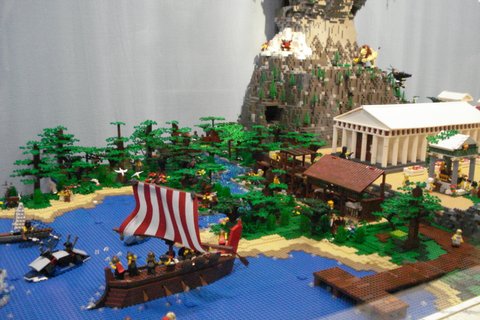
One of the interesting and worthwhile things I did this month was to lecture at the Surrey Museum. They were having a special lego exhibit and asked if I could do a slide presentation about ancient Greece which would include some aspects of travel.  I prepared a lecture of Armchair Travellers on Greek Myths and Muses which included some of the ancient heroes and legends as well as part of the Venetian and Byzantine history of Greece.  All the photos other than those borrowed from Wikipedia were taken by me on various journeys around Greece. 


ATHENS, Parthenon


At first I wasn't sure how the Lego exhibit connected with my lecture, but after having a look at it I realized that many of the places I spoke about in my talk were included as exhibits, such as these remarkable structures of Athens's acropolis and Parthenon. And there was even ancient Troy, which was included in my lecture about Homer's heroes Agamemnon and Achilles.


The display, built by the Vancouver LEGO club presented the world of gods and goddesses, heroes and monsters from ancient times and mythology. There were sets of lego on the tables for children to try their hand at building some structures themselves.  And there was also an interactive 'game' where kids could find certain items in the display and check them off on a paper.  I was more than impressed by this show and it certainly enhanced the subjects I talked about in my lecture.

Egypt, the Sphinx and pyramids

The Lighthouse of Alexandria


Tuesday, March 20, 2012

THE PERSIAN NEW YEAR: AN EXCERPT FROM 'SHADOW OF THE LION'

This is a chapter segment from "Shadow of the Lion" in which the Persians are celebrating their New Year (Nowruz).  I did a lot of research for this chapter, however it is one that is cut from the final draft. In this scene, the royal entourage is at Troy awaiting the ships that will carry them to Thrace, on their way to Macedon.  They have been informed that once they leave Troy they will not be allowed to worship their god as is their custom so this is their last Nowruz.


            The ceremony began at sundown. A rams horn sounded the summons for the
Persians to gather in the courtyard. Everyone came dressed in their finery for the occasion
and took their places in order of rank. Roxana and her ladies, including Leila, who were all
from noble families, sat on carpets on one side. Nabarzanes, the stewards, the Warder,
and visiting envoys stood in a circle around the stack of juniper logs for the New Years
pyre. The eunuchs, servants and slaves stayed behind them.

          The chanting started with a single voice but soon others joined in. As if in answer
came the soft beat of a tabor and the thin wail of a reed flute. The Magus entered the
courtyard, accompanied by the child and two acolytes who bore the sacred fire altar. As
the people shouted loud hosannas and spread palm branches in their path, the Magus raised
his want to bless them. Everyone laid on the ground and pressed their foreheads ot the
stones in obesience.

          The child shone like a jewel beside the dignified snowy-bearded priest who was
garbed in ceremonial garments of pure white. The Magus moved toward the altar and
washed his hands three times in the basin of clean spring water held by an acolyte. On the
altar was a small bowl containing grain roasted with salt, and seeds. Beside it were placed
baskets of figs, dates and dried herbs. Another dish held honey and another contained milk. He offered the grain and seeds at the altar and burned them for the God. Then he poured the honey and milk into a bronze offering dish ad set it on the ground in front of the altar, placing the baskets of fruit and herbs on the ground beside it.

          In a clear, pious voice, the Magus sand the anthem. There was an absolute silence as he sang the sacred words.
            “He is the God of all things
  The Fire of heaven and earth, sky and wind.
             He is the power of life and the power of death.
            All things that grow and fill the universe are His.

            The old priests hands shook as he lifted the flask of purified water and drank from
it. As he blessed the oil and poured some for the God, a sudden sound from beyond the stone walls stopped his voice. There was a long, murmuring hush, then a sigh of relief as the marching footsteps of guards calling out their rounds for the night watch retreated. The Magus stood in an attitude of prayer, his hands on his forehead.
      “We must pray for peace between all nations, food for the hungry, and steadfastness in the face of many hardships, he said. He bowed to the child, hand toforehead, and spoke the words of worship and adoration.
            “Lord, O light of all mankind, O Lord who sees all things,
            Upon the Shah who stands in awe of Thee
            Confer thy bounteous blessings...”
           Then he broke pieces of sandalwood and placed them in the fire holder, drank again from the consecrated water, and emptied the flask to east and west, sprkling some on the door lintels.
           “Rejoice with the fruits of the earth,” he cried.
          
             As the sacred offering burned, the thrum of a harp shimmered around the courtyard.


                  An acolyte threw a torch into the pile of logs. Jubilant cheers filled the courtyard. Cymbals clanged and tabors rattled. The blazing logs drenched everything in gold. Even the walls and pillars seemed to be burning. The Magus raised his wand and the people lifted their hands to sing the anthem of praise to the sky, sun and stars.

                 It was a glorious night. The air was blue with smoke and fragrant with the resin-scent of burning juniper. Above, in the clear- star-filled sky, the new moon hung like the curved blade of a shimshir. Just next to it, Venus shone brightly as a beacon.
                    The child drank in everything; the bright flames, the dazzle of light reflecting off  gold and jewelry. His rears rang from the din of the music. He looked around and saw his mother standing motionless, sparkling in the firelight. A strange power seemed to  radiate from her that made a tingling sensation prickle down his spine. He felt like crying, but did not know why. He looked over at Leila and gave her a hesitant smile. If he could have, he would run to her for reassurance, but it would not be seemly to behave like a baby.

                 The music of flutes and strings began. Hands clapped, drums and cymbals beat. Dancers began to twirl to the skirling of reed pipes and the rich lilting tune of the ivory flute. In the midst, with skirts and jewels swinging, arms entwined, the women wove and  twisted, swaying to the beat. He saw his mother, laughing as if she had no dread, no cares in the world, as she lead the dance.
                 Suddenly he was nudged forward, caught in her beckoning hands. She whirled him round and round, his feet flying over the stones as he laughed with delight, caught in the rhythm of the joyful dance.

                 Some of the men began to leap over the flames, calling on Atar the Fire, to bring them good fortune. Mesmerized by the hypnotic cadence of the music, the child held his breath as they jumped and twirled, daring the flames to scorch them. Their ululating grew louder and the dance became more frenzied, until finally the flames burned down to embers and the drum-beats slowed to a faint thudding. The fire dancers sank to the ground in a trance, beads of sweat streaming down their faces, their eyes glazed with rapture.

                Then the kitchen slaves announced that the feast was ready. The child took his
place beside the Magus seated on a dais raised above the heaps of pillows where the guests reclined. The entire floor was covered with dining cloths except for narrow spaces where the servants moved about carrying trays heaped with food.
                 There was pheasant cooked in pomegranate juice; whole roasted lambs; piglets stuffed with apples and pistachios; marrows and melons and fruits of every variety;pastries drenched in honey and little cakes made with almonds, dates and cloves. Before the feasting began the Magus blessed the special Nauruz foods: the sprouted grains; the purple hyacinth petals; the sweet puddings; the ripe black olives their brine of vinegar and herbs; the russet apples saved from the autumn harvest.
            “This is the time of thanksgiving and bestowing gifts,” he announced in his high,
ancient voice. It is the way we have celebrated the New Year since the old days when Shah Kyros proclaimed it to be a festival of friendship. He laid his hand on the childs head. The Shah, our Honored One, is always the first to be served.
            Nabarzanes tucked an embroidered napkin over the front of Iskanders coat.
        Iskander-shah, I wont even scold you today if you spill anything or talk with your
mouth full, he whispered good-humouredly. This napkin has been used by all the Persian
Shahs since the time of the Great Kyros, Father of Persia. He stood, and addressed the
banquet guests. Voices grew silent as he began his speech.
            “Our Shahs, the First Darius and Xerxes the Destroyer, were hated by the Greeks.
The Greeks say we Persians stole sacred treasures from the High Place in Athens and
drove their priests out of the temples. Because of this, Persians are not tolerated in
Greece, so when we go to Macedon, we will be prohibited from practicing our customs.
            He spoke in the high-bred Elamite tongue of the Persian royalty, in a voice deep-toned as
a nefer. His brows were drawn over his nose in a stern expression. Shah Kyros, the lords Annointed, ruled over many nations. Even though they did not speak the same language or worship the same God as Persia he believed that all men are Gods children, so he made those whom he conquered -- Medes, Assyrians, Babylonians, Soghdians, Bactrians -- one kingdom. We must try to live in peace and accord with the Macedonians. He looked down upon the child with a compassionate smile. Iskander-
shah, your father the Invincible Alexander, also believed in the union of all nations. He honored our God and paid tribute to the Great Kyros. You are a fortunate child, for you have been born into the best of two worlds. May you always be proud of who you are, and rule as wisely as your father and the Great Shah Kyros. He bowed low before the child in a gesture of respect. In his eyes were both pride and grief. The people of Persia look to you as their Shah now. You must live well and endure, for the sake of us all.

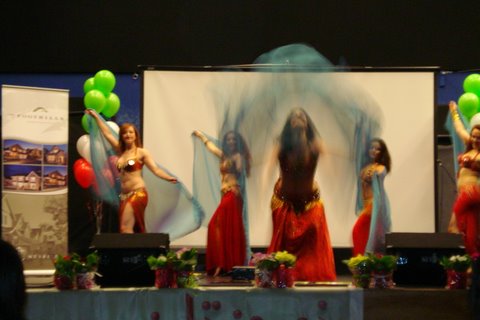
 The photos are from the Persian New Year (No-rooz) that I attended on the weekend to celebrate the Spring Equinox.

Saturday, January 28, 2012

PUTTING THE FINAL TOUCHES ON "SHADOW OF THE LION"

Bust of young Alexander, Pella


I'm starting my final round of edits and cutting of my novel "Shadow of the Lion" before handing it over to the professional editor.  It's been a long, difficult job going through it starting with all the workshopping and rewrites I did while writing it, followed by the first reader's critique.  Then, when I'd gone through editing her suggestions, another reader's critique with more detailed corrections.  That editing was strictly focusing on more cuts, spell checks and line edits.  Now I'm going through it again to see what more I can cut, as somehow in spite of dropping whole chapters the word count doesn't seem to shrink as much as I thought it would!


This is Where the Story Begins:  Babylon

And the Death of Alexander, June 323 BC:  Alexander's funeral carriage

Until you get yourself totally absorbed in the editing as I've been, you don't realize what a painstaking job it can be!  The writer is finished her work now and this last round of editing was much easier because of it.  I am able to detach myself and be more critical, spotting repetitious phrases, unnecessary information etc.  One of the problems with historical fiction is that the writer often puts too much of their research into the story when it isn't really necessary.

Because I workshopped it at my Scribbler's critique group all the way through, and worked in 'blocks', by the time it was completed in December 2010, I didn't need to do much rewriting.  It has been mainly the cutting and tightening up, disposing of passages that were not really needed  -- sort of 'overloads' of information.  Although most of those chapters that I dropped were really interesting and I enjoyed writing them, it was a matter of necessity to let them go.

So now I'm almost finished with it other than what the professional editor will have to suggest before I start pitching it out into the big wide world of publishers.  The only things I have left to write, are the acknowledgements, afterword and compiling my glossary and cast list (which are mostly done).  And then I'll brush up my synopsis at bit more.  Then it's done!   And I have to say I will be very relieved and happy to have it off my hands so I can focus on my other work-in-progress "Dragons in the Sky" which you'll be hearing more about in my blog soon.


This is Where the Story Ends:  The fortress of Amphipolis, Macedonia

The River Strymon, Amphipolis